
Local Price Guide for NC Homeowners
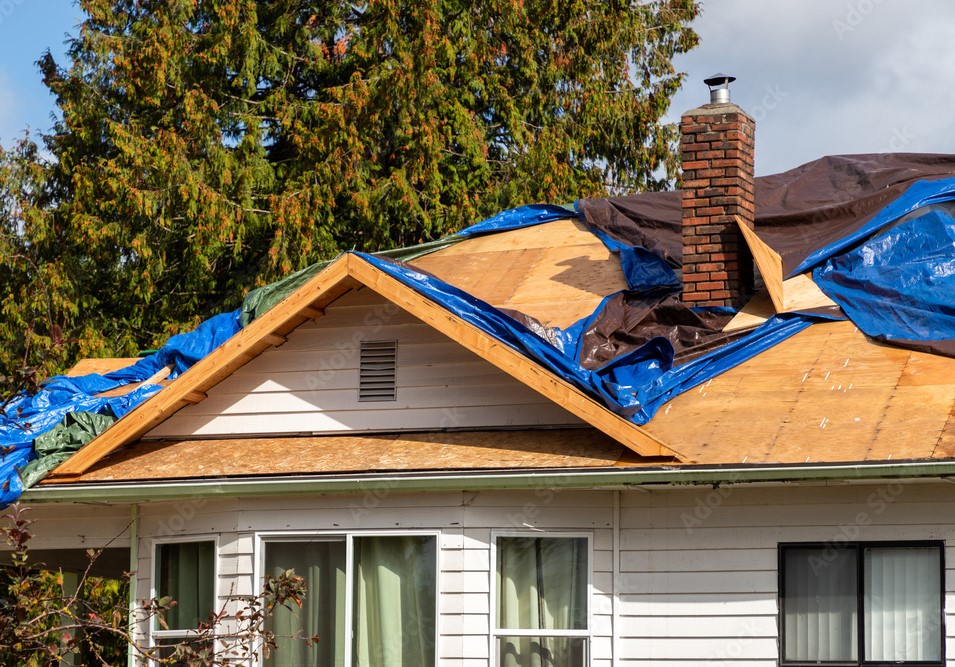
You found shingles in the yard after a storm. Or maybe there’s a brown stain spreading across the ceiling after a heavy rain. Now you’re trying to answer the question most homeowners ask first:
“How much is this going to cost me?”
Here’s what that usually means.
Quick Answer: Average Roof Replacement Cost in North Carolina
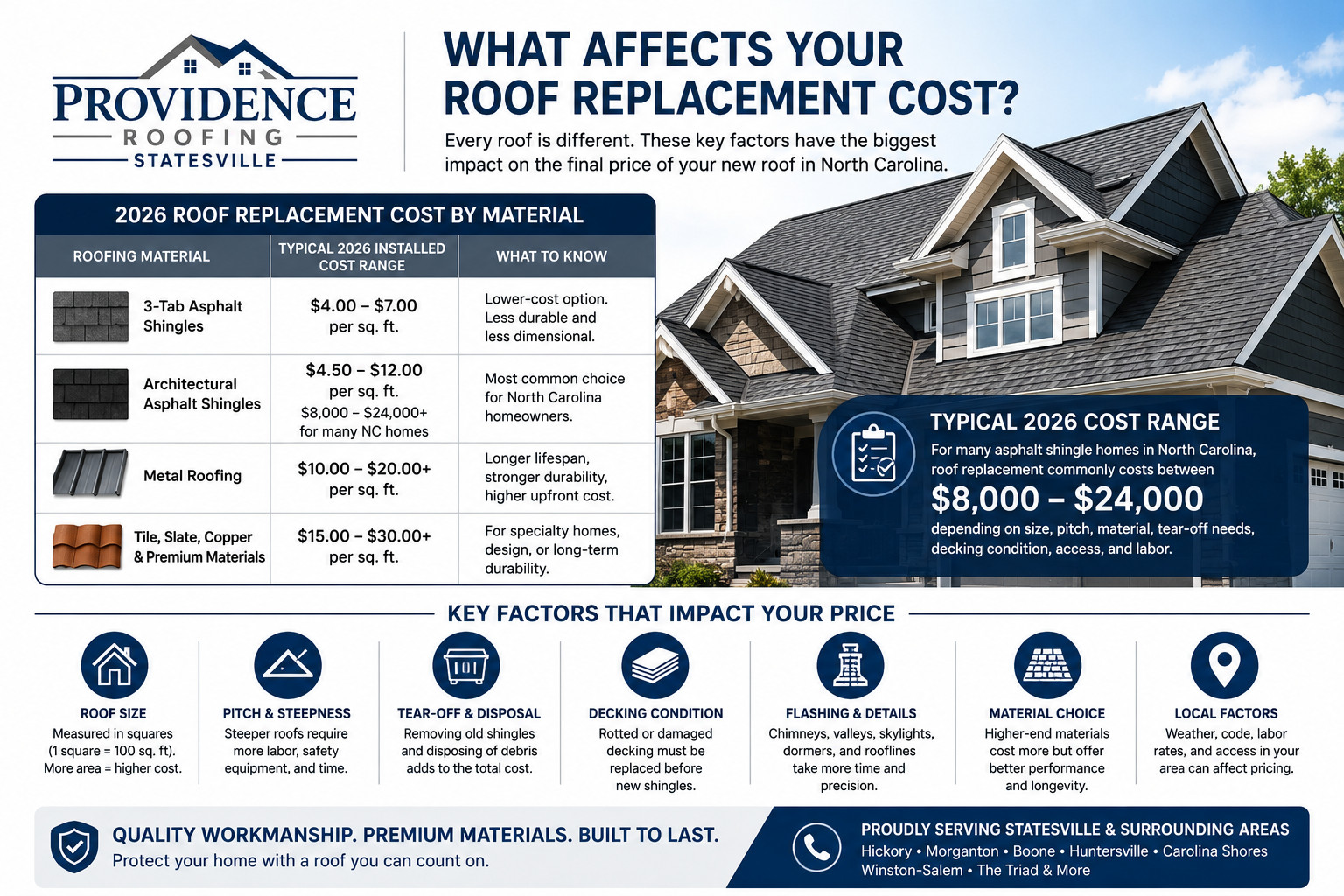
In 2026, a roof replacement in North Carolina commonly costs between $8,000 and $24,000 for many asphalt shingle homes, with the final price depending on roof size, pitch, material, tear-off needs, decking condition, access, and labor.
For asphalt shingles specifically, national 2026 cost sources commonly show installed pricing around $4 to $12 per square foot, while North Carolina-specific estimates often place a typical asphalt shingle replacement around $10,000 to $17,000+ for many average homes.
That does not mean your roof will automatically fall in that range. A small, simple ranch roof may cost less. A steep Boone roof, a large Huntersville home, a coastal Carolina Shores roof, or a roof with rotten decking can cost more.
2026 Roof Replacement Cost by Material in North Carolina
| Roofing Material | Typical 2026 Installed Cost Range | What to Know |
| 3-tab asphalt shingles | Lower-cost option | Less expensive, but not as durable or dimensional as architectural shingles |
| Architectural asphalt shingles | Often around $8,000–$24,000 for many NC homes | Most common choice for North Carolina homeowners |
| Metal roofing | Often much higher than asphalt | Longer lifespan, stronger durability, higher upfront cost |
| Tile, slate, copper, premium materials | Can climb significantly higher | Usually chosen for specialty homes, design, or long-term durability |
HomeAdvisor lists general shingle replacement at $4 to $12 per square foot installed, while Angi’s 2026 roof replacement data says professional roof replacement averages around $9,541 nationally, with material, pitch, size, and location driving the final number.
Why Roof Replacement Costs Vary So Much
Two homes can both be 2,000 square feet and have very different roofing costs.
That is because roof pricing is based on the roof itself, not just the square footage of the house.
1. Roof Size
Roofers measure roofing in squares. One roofing square equals 100 square feet of roof surface.
A simple 1,700-square-foot roof and a complex 2,800-square-foot roof are completely different jobs. More roof area means more shingles, underlayment, flashing, nails, labor, disposal, and time.
2. Roof Pitch and Steepness
A low-slope ranch home is usually easier and safer to work on.
A steep roof in Boone, Morganton, or the foothills may require more safety equipment, more labor time, and more careful installation. That can raise the cost.
3. Tear-Off and Disposal
If your old shingles need to be removed, the crew has to tear them off, protect the property, haul away debris, and dispose of materials properly.
A roof with multiple old layers can cost more than a clean single-layer tear-off.
4. Decking Damage
This is one of the biggest surprises for homeowners.
If the wood decking under the shingles is soft, rotted, or delaminated, it may need to be replaced before new shingles go on. You do not want new shingles installed over bad wood.
A good roofer should be able to show you photos of damaged decking before replacing it.
5. Flashing, Valleys, Chimneys, and Skylights
Roofs with chimneys, skylights, dormers, valleys, wall intersections, and multiple rooflines take more detail work.
That detail work matters. Many leaks do not start in the middle of the shingles. They start around transitions.
6. Material Choice
Architectural shingles usually cost more than basic 3-tab shingles, but they are also the more common modern choice for many homes.
Metal roofing costs more upfront but may make sense for certain homes, especially where durability, shedding snow, or long-term performance matters.
Local North Carolina Cost Factors
Roof replacement in North Carolina is not one-size-fits-all.
Hickory and Morganton
In the foothills, roofs often deal with tree coverage, wind-driven rain, older housing stock, and shaded areas that stay damp longer. That can lead to algae, moss, soft decking, or hidden moisture issues.
Boone
Boone roofs can be more complicated because of mountain weather, snow, ice, freeze-thaw cycles, and steeper rooflines. Roof access and pitch can affect both labor and safety requirements.
Huntersville and Statesville
These areas have a mix of suburban growth, newer developments, older homes, storm exposure, heat, and hail risk. Larger homes and more complex roof designs can push replacement costs higher.
Carolina Shores
Coastal humidity, salt air, strong wind, and storm systems can make material selection and installation details especially important. A cheaper roof is not always cheaper if it does not hold up well in coastal conditions.
Winston-Salem and the Triad
The Triad has a wide mix of older homes, newer neighborhoods, storm lines, wind events, and hail exposure. Roof age and storm history can heavily affect whether repair or replacement makes more sense.
Repair vs. Replacement: Which One Do You Actually Need?
You may not need a full replacement.
A repair may make sense if:
- The leak is isolated
- The roof is still fairly young
- Damage is limited to one area
- Flashing or pipe boots are the main issue
- The decking is still solid
- Shingles are not failing across the whole roof
Replacement may make more sense if:
- Your roof is near the end of its life
- You have repeated leaks in different areas
- Shingles are curling, cracking, or missing across large sections
- Granules are collecting heavily in gutters
- Decking is soft or rotted
- Storm damage is widespread
- Repairs are becoming frequent and expensive
Small roof problems rarely stay small, but that does not mean every problem requires a new roof. The right answer depends on the roof’s age, condition, damage pattern, and whether the problem is isolated or system-wide.
Should Insurance Pay for a Roof Replacement?
Maybe, but do not assume.
Homeowners insurance may help with roof replacement when damage comes from a covered event, such as hail, wind, or falling debris. It usually does not cover normal aging, wear and tear, poor maintenance, or an old roof simply reaching the end of its life. Coverage depends on your policy, deductible, cause of damage, inspection findings, and carrier approval.
A good roofer can document visible damage, take photos, and explain what they see. But only your insurance carrier can approve or deny a claim.
Why One Roofing Estimate May Be Thousands More Than Another
A cheaper estimate is not always wrong. A higher estimate is not always better.
But if one quote is thousands less, you should ask what is included.
Look closely at:
- Tear-off and disposal
- Shingle type and manufacturer
- Underlayment
- Ice and water protection
- Starter shingles
- Ridge cap shingles
- Ventilation
- Pipe boots
- Chimney and wall flashing
- Drip edge
- Decking replacement policy
- Cleanup and property protection
- Workmanship warranty
- Permit handling, if required
A vague roof estimate can look cheaper because important pieces are missing.
How to Get a More Accurate Roof Replacement Price
The safest next step is a roof inspection, not a guess from the ground.
Before you approve a replacement, ask the roofer:
- How many roofing squares is my roof?
- Is this a full tear-off or overlay?
- What shingle are you pricing?
- What happens if you find rotten decking?
- Are flashing, ventilation, and pipe boots included?
- Will you show photos of problem areas?
- What warranty comes with the workmanship?
- Is this a repairable issue, or is replacement truly the better option?
A trustworthy roofing company should be willing to explain the estimate in plain language.
When to Call a Roofer
Call a roofer if you notice:
- Active leaking
- Ceiling stains
- Missing shingles
- Lifted shingles after wind
- Hail marks or storm damage
- Sagging rooflines
- Soft spots in the roof deck
- Granules in gutters
- Daylight showing in the attic
- Repeated repairs that are not holding
Do not climb on a steep, wet, icy, storm-damaged, or unstable roof. Don’t guess from the ground either. A roof can look fine from the driveway and still have lifted shingles, failed flashing, or hidden decking damage.
Bottom Line: What Should You Budget?
For 2026, many North Carolina homeowners should expect a roof replacement to fall somewhere around:
- Basic asphalt roof: often lower end of the range
- Architectural asphalt roof: commonly around $8,000–$24,000, depending on size and complexity
- Metal roof: often significantly more than asphalt
- Premium roofing: can be much higher
The only way to know your real number is to have the roof measured and inspected.
If you are not sure whether your roof needs a repair or a full replacement, Providence Roofing can inspect it, explain what we see, and help you choose the option that protects your home without overspending.
FAQs
How much does a roof replacement cost in NC in 2026?
Many asphalt shingle roof replacements in North Carolina fall around $8,000 to $24,000, but the final cost depends on roof size, pitch, materials, decking condition, access, tear-off needs, and local labor.
Is it cheaper to repair or replace a roof?
Repair is cheaper upfront if the problem is isolated. Replacement may be smarter if the roof is aging, leaking in multiple areas, or repair costs are starting to stack up.
Does a roof leak always mean I need a new roof?
No. Some leaks come from flashing, pipe boots, missing shingles, or small storm damage. A full replacement is usually considered when the roof has widespread damage, age-related failure, or repeated leaks.
What is the most common roofing material in North Carolina?
Asphalt shingles are one of the most common roofing materials because they balance cost, performance, availability, and curb appeal.
Can insurance cover roof replacement in North Carolina?
Sometimes. Insurance may cover sudden storm-related damage, but it usually does not cover normal aging or wear. Coverage depends on your policy, deductible, cause of damage, inspection findings, and insurance carrier approval.