

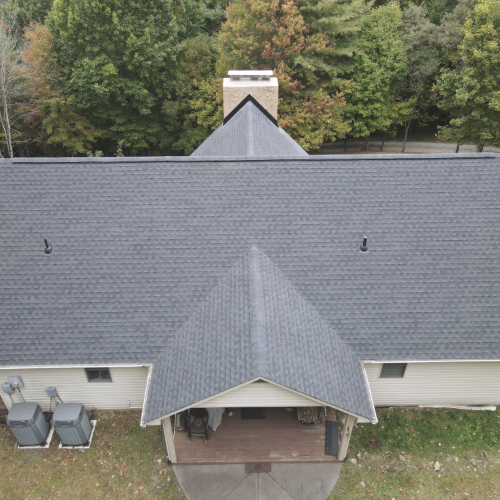
It’s frustrating to handle a roof repair the “right” way and still watch a ceiling stain grow weeks later. From the yard, everything looks normal. The shingles lie flat, the color matches, and nothing seems out of place, but somehow water is still getting in.
That’s the invisible leak problem. Water can slip into the roof system through flashing, vent seals, fasteners, or tricky transition points, then travel along decking or underlayment before it finally shows up inside.
Repairs also fail when they fix what’s visible instead of the real entry point, so even a clean shingle replacement can miss the source. With roofing, the true waterproofing details are often underneath the shingles, not on the surface.
An invisible roof leak happens when water gets into the roof system through areas that aren’t obvious from the outside. The shingles can look perfect because the real problem is usually under, beside, or above them.
Common causes include:
If you tell me where the stain is (room/ceiling area) and when it leaks (only heavy rain, windy storms, or random), I can narrow the most likely entry points.
Roof repairs can fail even when the shingle replacement looks correct because the visible shingles are often not the true source of the leak. Water may be entering higher up the roof, at a nearby transition, or around a penetration, then traveling under the surface before it shows up inside. So the repair fixes what’s easy to see, but not what’s actually letting water in.
Another common reason is that the problem sits in the “hidden” layers. Underlayment tears, improper lapping, exposed fasteners, or damaged decking can keep channeling water even after new shingles are installed on top. From the ground, everything looks neat, but the water path underneath never got sealed.
Repairs also fail when flashing and penetrations aren’t rebuilt correctly. Step flashing at walls, chimney flashing, valleys, pipe boots, and skylight edges are frequent leak zones. If a repair reuses old flashing, relies on caulk instead of proper layering, or doesn’t integrate the flashing with the underlayment, the leak can return after the next hard wind-driven rain.
Finally, leaks can be condition-specific and hard to “test” right away. A roof might only leak during long storms, certain wind directions, or when gutters overflow. It can look solved after a light rain, then fail later because the original cause was never fully diagnosed or the repair scope was too limited.
Water can enter a roof without visible shingle damage because shingles aren’t a sealed barrier. They’re part of a layered system that sheds water, and leaks often happen at the details and hidden layers.
Here are the most common ways it happens:
If you tell me where the stain is and when it happens (windy storms, long rains, random), I can narrow the most likely entry points.
Hidden leaks after a repair are most often caused by flashing problems, not shingles. Step flashing at roof-to-wall areas, chimney flashing, counterflashing, and apron flashing can be bent, reused, or layered incorrectly. Even a small gap or poor overlap can let water slip behind the system and travel before it shows up inside, making the shingles look innocent.
Another common culprit is roof penetrations. Pipe boots can crack on the back side where you can’t see it from the ground. Vent caps, exhaust vents, attic fans, and satellite mounts can loosen or lose their seals. Nails or screws around these penetrations can also create tiny pathways that only leak during wind-driven rain.
Valleys and transition zones also create hidden leaks because they carry high water volume. Debris buildup, worn valley lining, exposed fasteners in the wrong place, or underlayment that wasn’t properly lapped can all cause leaks. Repairs that only swap surface shingles in a valley often miss what’s happening underneath.
Finally, the issue can be in edges and underlayment layers. Missing or poorly installed drip edge, backed-up gutters, ice-and-water barrier gaps, or torn underlayment can channel water into the roof deck. In some homes, attic ventilation issues create condensation that mimics a roof leak, so the “repair” never addresses the real moisture source.
If you’re dealing with a leak that keeps coming back even though the shingles look fine, Providence Roofing can help you find the true entry point and fix it the right way. We focus on the roof’s hidden leak zones like flashing, penetrations, valleys, and underlayment transitions, not just the visible surface.
You’ll get a clear explanation of what’s happening, what needs to be corrected, and how to prevent the same problem from returning after the next storm. Reach out today to schedule a roof inspection and repair plan that solves the cause, not just the symptom.