

You wake up after a freezing night in Boone and notice a brown stain spreading across the ceiling.
The roof looked fine last fall. The shingles are not missing. There was no big thunderstorm. But now, in the middle of winter, water is showing up inside the house.
Here’s what that usually means.
You may be dealing with an ice dam.
Quick Answer
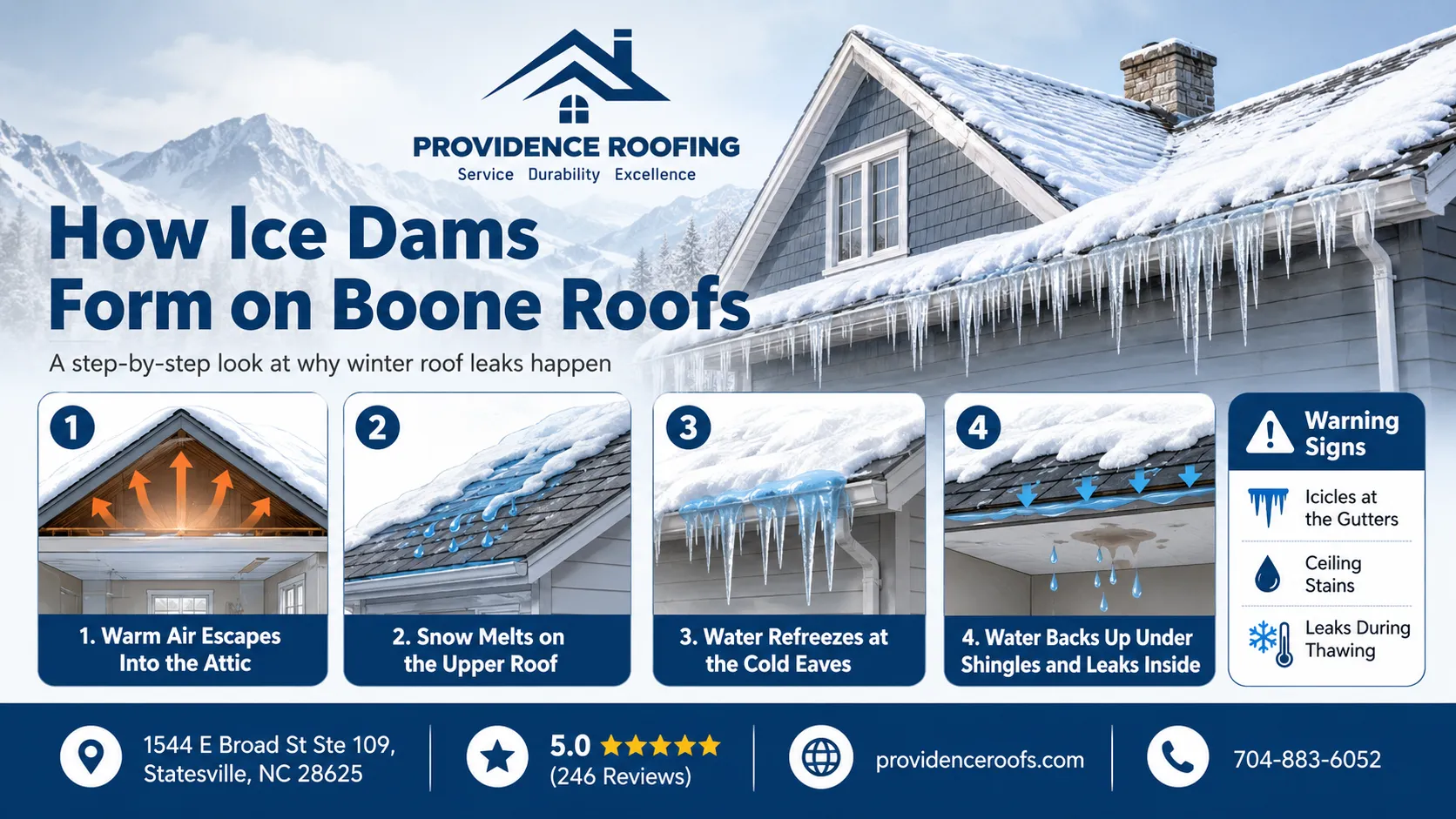
Boone roofs often leak in the winter because snow melts on the warmer upper part of the roof, runs down toward the colder eaves, and refreezes. That frozen ridge of ice blocks water from draining off the roof. Once the water has nowhere to go, it can back up under shingles and leak into the attic, ceiling, walls, or insulation.
The roof may not be “bad” in the way homeowners usually think. The real problem is often a combination of:
- Heat escaping into the attic
- Poor attic insulation
- Poor attic ventilation
- Snow sitting on the roof
- Freezing temperatures at the roof edges
- Valleys, low slopes, or shaded roof sections
- Gutters packed with ice or debris
The University of Minnesota Extension explains that ice dams form when the roof surface has uneven temperatures: snow melts over warmer areas, then refreezes when it reaches colder roof edges. The Building America Solution Center also points to attic air sealing, insulation, and ventilation as key prevention steps.
Why Boone Homes Are More Vulnerable Than Other Parts of North Carolina
Boone is not Charlotte. It is not Hickory. It is not Carolina Shores.
Boone roofs deal with mountain winter conditions: colder nights, freeze-thaw cycles, snow, ice, wind, shaded slopes, and steep rooflines. Even when the daytime temperature rises enough to melt snow, the roof edges can refreeze quickly once the sun drops or shade hits the eaves.
That freeze-thaw cycle is what turns a normal roof into a winter leak risk.
A Boone homeowner may see:
- Snow on the upper roof
- Icicles hanging from the gutters
- Ice packed along the eaves
- Water stains near exterior walls
- Dripping from soffits
- Damp insulation in the attic
- Leaks that only happen during snow or thawing
That last part is important.
If your roof only leaks during winter thaw cycles, it may not be a normal rain leak. It may be water backing up behind ice.
What an Ice Dam Actually Does to Your Roof
Think of your shingles like overlapping armor.
They are designed to shed water downward. Rain hits the roof, runs over the shingle laps, enters the gutter, and drains away.
But an ice dam changes the direction of the water.
Instead of flowing down and off the roof, melting snow hits a wall of ice at the eave. The water pools behind it. If that water gets high enough, it can work backward under the shingles.
Shingles are good at shedding water. They are not designed to act like a bathtub liner.
Once water backs up under the shingles, it can reach:
- Roof decking
- Nail holes
- Underlayment
- Fascia
- Soffits
- Attic insulation
- Drywall
- Interior paint
- Exterior walls
That is why an ice dam can make a roof leak even if the shingles are not blown off.
The Real Cause Is Usually Heat Loss
Most homeowners blame the ice.
But the ice is usually the symptom.
The deeper problem is warm air escaping from the living space into the attic. That warm attic air heats the underside of the roof deck. Snow above that warm area melts. The water runs down to the colder eave and freezes.
The National Weather Service recommends keeping heavy snow loads off the roof when safe, keeping gutters and downspouts clear, and evaluating attic insulation and ventilation to reduce ice dam risk.
The common heat-loss trouble spots are:
- Attic access doors
- Recessed lights
- Bathroom fans venting into the attic
- Kitchen exhaust leaks
- Gaps around plumbing penetrations
- Chimney chases
- Poor insulation coverage near eaves
- Blocked soffit vents
- Unbalanced ridge and soffit ventilation
A good roofer should be able to look beyond the shingles and ask, “Why is this part of the roof warming up?”
Why Ice Dams Cause Leaks Near Walls and Ceilings
Ice dam leaks often show up near exterior walls because the eaves are where ice usually forms.
You may see:
- Ceiling stains near the outside wall
- Paint bubbling above a window
- Water dripping from the top of a wall
- Wet insulation near the attic edge
- Moldy smell after snow melts
- Staining around soffits or fascia
That location can confuse homeowners. They may think the window is leaking or the siding has failed. Sometimes that is true. But in Boone, after snow and ice, the roof edge should be inspected too.
Don’t guess from the ground.
Ice dam leaks can hide behind drywall and insulation before you ever see a stain.
Is This a Roof Problem or an Attic Problem?
It can be both.
Here’s the plain answer:
The roof has to be built to handle winter conditions, but the attic often causes the ice dam.
A roof replacement alone may not solve the issue if the attic is still leaking heat.
A proper fix may involve:
- Roof inspection
- Attic inspection
- Ventilation review
- Air sealing
- Insulation correction
- Ice and water shield evaluation
- Gutter and drainage review
- Flashing inspection
That is why the cheapest winter roof repair may not be the real fix. Patching shingles at the leak spot does not stop the roof from warming unevenly.
Common Boone Roof Areas Where Ice Dams Form
Ice dams are more likely around parts of the roof where snow sits, drainage slows, or heat collects.
Watch these areas:
1. Eaves and Gutters
This is the classic ice dam location. Water freezes at the colder roof edge and creates a ridge that traps more water behind it.
2. Valleys
Roof valleys collect more water and snow. If ice forms there, water can back up quickly.
3. Low-Slope Roof Sections
Lower slopes shed snow and water more slowly. That gives ice more time to build.
4. Dormers
Dormers create corners, walls, and roof transitions where snow can drift and water can get trapped.
5. Chimneys and Skylights
Any roof penetration needs careful flashing. Ice and backed-up water make weak flashing show itself fast.
6. North-Facing or Shaded Roof Slopes
Shade keeps roof edges colder longer. That makes refreezing more likely.
What Not to Do During an Ice Dam
This is where homeowners can accidentally make the damage worse.
Do not:
- Climb onto an icy roof
- Chip ice with a hammer or axe
- Pry up frozen shingles
- Pour hot water on the roof and walk away
- Ignore active interior leaking
- Assume gutters are the only problem
- Let soaked insulation stay wet
Ice is heavy. Shingles are brittle in cold weather. A slippery roof in Boone winter conditions is not worth the risk.
The safest next step is to document the leak, protect the inside of the home, and have the roof and attic inspected.
What to Do If Your Roof Is Leaking Right Now
If water is actively coming in, do this first:
- Move furniture and valuables away from the leak.
Protect floors, electronics, and anything that can absorb water. - Catch dripping water.
Use a bucket or container. If the ceiling is bulging, that may mean water is pooling above the drywall. - Take photos.
Photograph the stain, dripping water, attic moisture, ice buildup, and exterior conditions if you can do it safely from the ground. - Check the attic only if it is safe.
Look for wet insulation, dripping roof decking, or water trails. Do not step off attic framing. - Call a roofer.
Active winter leaks need attention before the next freeze-thaw cycle makes the damage worse.
Small roof problems rarely stay small, especially when water is trapped behind ice.
Temporary Fixes vs. Permanent Fixes
There is a difference between stopping today’s water and preventing next winter’s leak.
Temporary measures may include:
- Safely removing snow from the roof edge with a roof rake from the ground
- Clearing gutters and downspouts if accessible and safe
- Managing interior water
- Emergency leak control
- Professional ice dam removal in severe cases
Temporary fixes help reduce immediate damage. They do not solve the cause.
Long-term prevention may include:
- Sealing attic air leaks
- Improving attic insulation
- Balancing soffit and ridge ventilation
- Installing or correcting ice and water shield
- Repairing flashing
- Replacing damaged decking
- Fixing gutter drainage
- Correcting problem roof transitions
Building America’s guidance emphasizes three major prevention steps: air sealing the ceiling plane, insulating the attic, and ventilating the roof assembly.
Does an Ice Dam Mean You Need a New Roof?
Not always.
You may not need a full replacement if:
- The roof is still in good condition
- The leak is limited to one area
- Shingles are not brittle, curling, or failing
- Decking is still solid
- The main issue is attic heat loss
- Flashing can be corrected
- Ice and water protection is adequate or can be improved in targeted areas
A replacement may make more sense if:
- The roof is near the end of its life
- Shingles are cracked, curled, or losing granules
- Leaks are happening in multiple areas
- Decking is soft or rotted
- Ice has damaged the eaves, fascia, or valleys
- The roof was installed without proper winter protection
- Repairs are becoming frequent
The right answer depends on the roof’s age, condition, installation details, and attic performance.
A good roofer should be able to show you what failed, not just tell you the roof needs replacing.
Will Insurance Cover Ice Dam Damage?
Maybe.
Insurance coverage depends on your policy, the cause of damage, inspection findings, deductible, and carrier approval. Some policies may cover sudden interior water damage related to ice dams, while others may limit or deny coverage if the issue is tied to maintenance, poor ventilation, or long-term conditions.
Do not assume coverage. Do not assume denial either.
Document everything and review the situation with your insurance carrier.
How Boone Homeowners Can Prevent Ice Dam Leaks
Before winter, a Boone homeowner should look at the whole roof system.
That means:
- Make sure gutters and downspouts are clear
- Check for loose or missing shingles
- Inspect flashing around chimneys, walls, and skylights
- Confirm attic ventilation is not blocked
- Look for uneven insulation in the attic
- Seal obvious attic air leaks
- Watch for bathroom fans venting into the attic
- Check for old leak stains before snow arrives
- Ask whether vulnerable eaves have proper ice and water protection
Ice dam prevention is not about one magic product. It is about keeping the roof cold, letting air move correctly, and making sure the roof edge is protected if water backs up.
Bottom Line
Boone roofs leak in the winter because mountain weather exposes weaknesses that may not show up during a normal rain.
Snow melts. Water runs down. The eaves freeze. Ice blocks drainage. Water backs up under shingles. Then the leak appears inside.
The visible ice is only part of the problem. The real issue is often heat loss, ventilation, insulation, drainage, and roof detailing working against each other.
If you see icicles, ceiling stains, wet attic insulation, or leaking during a winter thaw, don’t guess from the ground. Providence Roofing can inspect the roof and attic, explain what is causing the leak, and help you decide whether you need a repair, ventilation correction, or a more complete roofing solution.
FAQs
Are icicles always a sign of an ice dam?
Not always. Small icicles can happen during winter weather. Large icicles, heavy ice at the eaves, and leaks during thawing are more concerning.
Can a newer roof still get ice dams?
Yes. A newer roof can still develop ice dams if the attic is poorly air sealed, under-insulated, or improperly ventilated.
Should I knock ice off my gutters?
No. Chipping ice can damage shingles, gutters, and fascia, and it can be dangerous. Heavy ice should be handled carefully, often by a professional.
Does ice and water shield prevent all ice dam leaks?
No. It helps protect vulnerable areas, but it does not fix the cause of ice dams. Air sealing, insulation, and ventilation still matter.
Why does my roof only leak when snow melts?
That is a common ice dam warning sign. Water may be backing up behind frozen eaves and working under the shingles instead of draining off the roof.